Daniel Burnham and Bacolod’s Architectural Jewel
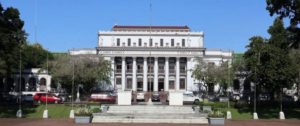
Many of the country’s most beautiful historic buildings were the work of renowned American architect and planner Daniel Burnham. In the United States, his reputation was secured through a series of landmark projects that reshaped the urban landscape. He was the chief architect behind Chicago’s World’s Columbian Exposition of 1893, the celebrated “White City” that set new standards for civic design. Burnham also oversaw the construction of iconic buildings such as New York’s Flatiron Building, one of the first steel‑frame skyscrapers and Union Station in Washington, D.C.
Invited to the Philippines in the early 1900s, Burnham left a lasting imprint on Manila, Baguio and provincial capitals through his Beaux‑Arts vision of civic grandeur. His influence extended to Bacolod, where the Negros Occidental Provincial Capitol Building — completed in 1933 — is often hailed as the most beautiful capitol building in the Philippines.
The Capitol’s E‑shaped floor plan, grand ceremonial steps and three‑story Corinthian colonnades embody Burnham’s emphasis on symmetry and monumental scale. Filipino architect Juan M. Arellano, one of the country’s foremost designers, translated Burnham’s vision into reality, ensuring the building reflected both American neoclassical ideals and local aspirations. Construction began in 1927, amid disputes over land acquisition, and was finally completed in 1933.
The Capitol sits prominently on Gatuslao Street, framed by expansive lawns and the Capitol Park and Lagoon, whose reflecting pool mirrors the building’s façade. Its neoclassical symmetry, wide steps and soaring columns make it a civic centerpiece. The late National Artist for Architecture Leandro V. Locsin once described it as “the most beautiful capitol building in the Philippines” for its fine proportions and harmony.
Beyond aesthetics, the building has served as the seat of government for Negros Occidental, housing the governor’s office and legislative chambers. It symbolized the province’s prosperity during the height of the sugar industry and continues to function as a hub of administration and public life.
The Negros Occidental Provincial Capitol Building is more than an administrative center; it is a civic symbol that links Bacolod to the broader narrative of American colonial urban planning and Filipino architectural excellence. Burnham’s vision, filtered through Arellano’s execution, produced a structure that remains unrivalled in beauty and significance. Nearly a century after its completion, it continues to stand as Bacolod’s most distinguished landmark — a reminder of the city’s place in the architectural and cultural history of the Philippines.* (Robert Harland)


Comments