DOE Secretary Garin Admits Planning Failure As Visayas Faces Shortfall Years in the Making
The Department of Energy (DOE) admitted that the Visayas lacks sufficient baseload generation to meet growing electricity demand, prompting recurring power alerts and exposing the region’s vulnerability to the loss of even a single major power plant.
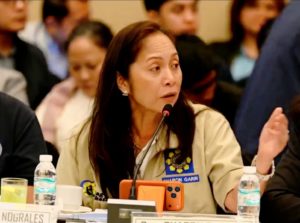
Energy Secretary Sharon Garin made the admission during Saturday’s joint congressional hearing of the House Committees on Energy, Visayas Development, and Legislative Franchises on October 3, as lawmakers pressed the DOE and energy sector stakeholders on the recurring power crisis in the Visayas.
“If we look at Visayas on island assessment… may kulang talagang baseload sa Visayas,” Garin told lawmakers.
Garin explained that while Negros can produce excess electricity during the day, much of the excess comes from solar generation. Demand, however, peaks in the evening when solar output declines.
“So saan nakukuha yung kulang sa gabi?,” Garin asked, pointing to the Visayas’ dependence on generation from other islands and on interconnection.
“Negros alone cannot survive because there is not enough baseload,” she said.
Garin also warned that an outage in Panay could immediately affect Negros because of the islands’ dependence on interconnection.
“We’ve been trying to assess how do we make it independent bago pa mag-alerts,” she said.
She also pointed to Cebu’s rapidly growing electricity demand, which continues to outpace the delivery of new generation projects.
“Cebu is growing exponentially and projects are not keeping up with the demand. We have to catch up. We still have time to catch up,” Garin said.
Generation shortfall could persist until 2028
Garin told lawmakers that the government needs additional generation capacity to address the supply gap, with the current situation potentially persisting until 2028.
She warned that the Visayas could trigger another grid alert whenever a major power plant goes offline.
“Isang power plant lang mawawala, mag-alert ulit tayo and that is not good for business,” Garin said.
The admission prompted lawmakers to question why the government failed to anticipate the generation shortfall despite years of projected demand growth.
DOE confirms transmission grid functioning; Hernandez points to generation shortage
House Committee on Energy Chair Rep. Jose Alvarez questioned why the Visayas continues to experience power alerts despite the interconnection of the Luzon, Visayas, and Mindanao grids.
“Lahat ng Visayas grid connected, okay na rin ang grid connecting from Mindanao and Luzon to Visayas,” Alvarez said.
He pointed to the simultaneous shutdown of several power plants as a major factor behind the crisis.
“Pero ganito pa rin kasi nga nagkaroon ng problema kasi sabay-sabay nawala lahat ng power plants,” Alvarez said.
Alvarez then questioned why the Visayas could not immediately receive excess electricity from Luzon and Mindanao whenever available.
“Bakit hindi naipapadala agad ang excess from Luzon and Mindanao kung meron?” he asked.
Garin explained that the transmission grid continues to function, but Mindanao also faced generation problems during the period and entered Red Alert.
“The grid is functioning naman,” Garin said. She explained that the problem arose when several power plants in different areas simultaneously became unavailable, limiting the amount of generation available to the Visayas despite the existing interconnection.
Rep. Ferdinand Hernandez then pointed to the return of several generating units as evidence of the critical role of generation availability in preventing grid alerts.
“Kaya walang grid alerts kasi nakabalik na ang mga power plants, meaning may supply,” Hernandez said.
“Malinaw na hindi transmission ang issue. May demand ka, may supply,” he added.
Tinio calls out failure in planning
Rep. Antonio Tinio of the ACT Teachers Party-list questioned the government’s planning after Garin told lawmakers that the country needs years to bring additional generation capacity online.
“Obviously, this is a failure in planning,” Tinio said. “Sabi nyo kanina, three years ang kailangan. Dapat na-project ito noon pa, pero di nagawa. Kulang ang baseload kaya ito tayo ngayon,” he added.
Tinio’s remarks highlighted the concern over the long lead time for new generation projects, even as the Visayas continues to experience tight supply conditions.
DOE turns to batteries as immediate measure
Garin identified battery energy storage systems as an immediate measure to address the mismatch between daytime excess generation and evening peak demand.
She said the DOE asked NGCP to contract battery storage facilities as early as May. She explained that battery storage could capture excess daytime generation in the Visayas and release the stored electricity when demand rises in the evening.
“Kasi yung Visayas may excess sila, puwede itago sa batteries,” Garin said.
The battery storage proposal seeks to provide an immediate buffer while the government works to bring additional generation capacity online.*


Comments