SRA Brings Home Global Innovations, Local Gains After ISCCT Comeback
After four decades of absence, the Philippines, through the Sugar Regulatory Administration (SRA), makes a strong comeback to the International Society of Sugar Cane Technologists (ISSCT) Congress, held at Centro de Eventos Valle del Pacífico in Cali, Colombia from Aug 22 to 31.
More than a symbolic return, the SRA’s participation signals a renewed commitment to harnessing global best practices—ranging from climate-resilient varieties to precision farming—to future-proof the Philippine sugar industry and secure better yields and resilience for farmers back home.
Representing the country were Dr. Ma. Lourdes Almodiente, SRA’s OIC-Deputy Administrator for Research, Development, and Extension (RDE), and Rachel Sarol, Senior Science Research Specialist and head of the SRA- Luzon Agricultural Research and Extension Center (LGAREC) Breeding Program.
Alongside over 1,100 delegates from 60 countries, Almodiente and Sarol engaged in plenaries, workshops, and technical sessions highlighting climate-resilient sugarcane varieties, precision agriculture, and innovative pest and disease management.
Dr. Almodiente shared that SRA’s participation in this Centennial Congress “allowed us to learn from the best practices of other sugar-producing countries,” she said.
She also emphasized the importance of benchmarking the Philippines’ initiatives with global practices.
“It reaffirmed that our local research efforts are aligned with global directions, but it also showed us areas where we can further strengthen our programs to better serve our farmers,” she adds.
Sarol, on the other hand, underscored the value of the discussions on molecular breeding and variety improvement, noting their relevance to SRA’s current efforts. “
“The discussions on molecular breeding and variety improvement are particularly valuable for our work at SRA-LGAREC. These learnings will help us enhance our breeding program so we can deliver high-yielding, pest-resistant, and climate-adaptive varieties to Filipino farmers,” he said.
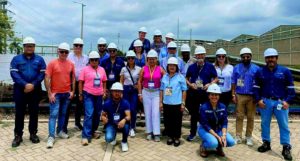
Beyond the sessions, the SRA delegates joined technical tours of Colombia’s sugar mills, farms, and the Cenicaña research center, gaining first-hand exposure to advanced cultivation and processing systems that can be adapted for Philippine conditions.
The SRA highlighted that this comeback to ISSCT is not only about reconnecting with the international community but also about ensuring that Filipino sugarcane farmers benefit from the latest scientific advances. Moving forward, the agency plans to integrate global best practices into breeding, research, and pest management programs while forging stronger local and international partnerships.
Celebrating a century of knowledge exchange and innovation in the global sugarcane industry, the ISSCT serves as the premier platform for sugarcane knowledge exchange. The Philippines’ participation reaffirmed its place in the global conversation—showing that local practices are not only keeping pace but are at par with world standards.* (PR)


Comments