Lessons from the Chinese Spring Festival at the Yuan Thong Temple
(FEATURED PHOTO) The serene yet awe-inspiring façade of the Yuan Thong Temple, beautifully adorned with symbolic round lanterns that embody wholeness, completeness, and the harmony that binds families together.* (GABS / JGT photos)
There is nothing wrong with learning and adapting certain Chinese cultural thoughts and practices, like the preparation of twelve or thirteen round fruits every media noche, which can be traced to the Chinese thought of round objects to symbolize completeness, continuity, and prosperity. In the same way that Filipinos absorbed certain American colonial thinking by internalizing Hollywood-driven value system, singing and dreaming of “White Christmas”, consciously or unconsciously, embracing all the assumptions that go with this cognition, whether bad or good.
There is a problem, however, if Filipinos are unable to dichotomize what is superstition and what is cultural tradition. Although superstition is part of culture, it must be clearly distinguished and defined, otherwise it will be mistaken for “philosophical essence”.
Case in point is the celebration of the Lunar Chinese Spring Festival, which is more popularly known as the “Chinese New Year” here in Bacolod City, in various parts of the country, and in other parts of the world. The Chinese horoscope, “Feng Shui” practices, the proliferation and sale of Chinese amulets for good luck, and the like, are highlighted and uncritically bannered. The Fookien “Kiong Hee Hwat Chai”, the Mandarin “Kong Hei Fa Chai” and the Cantonese “Kong Hei Fat Choi”, which obviously was popularized by the Americans, are sloganized, all forming part of the New Year celebration and resulting into the usual commercialized excitement rather than taking the opportunity of the occasion as a separate time for reflection, recollecting its historical roots or appreciation of its philosophical and ethical essence.
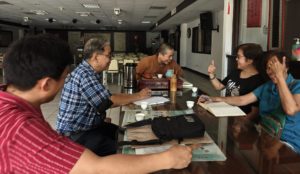
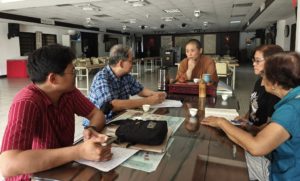
The atmosphere was markedly different at the Fo Guang Shan (FGS) Yuan Thong Temple, along Burgos Street, Bacolod City. In a discussion led by Master You Hui, together with devotees Atty. Corazon Romero, Nena King, and Rheyan Esgana, something deep, meaningful, educational, historical, and reflective about the Chinese Spring Festival was drawn out.
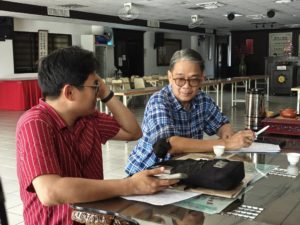
The discussion began in the Chinese classic story-legend of the ferocious beast “Nian”. The Nian appears every year to terrorize the villages, destroying crops and lives. It was later discovered that the Nian feared “bright lights, loud noises, and the color red”. By lighting fires, setting off firecrackers, and decorating their homes with red banners, they drove the monster away. This explains why the Chinese, even before the imperial dynasties, practiced holding lantern festivals before the onset of winter—to brighten the community as it entered the “Tiempo Muerto” of the bitter cold season, a period of “death and dormancy” that lasted until winter ended and spring began, when lanterns, loud sounds, and the color red once again took center stage.
“Bright lights, noises, and the color red” embodies the victory over fear and darkness which eventually became the basis of the Spring Festival, symbolizing the triumph of light over danger, renewal over destruction, and hope at the beginning of a new year.
Following the symbolism of Nian story, the Temple will celebrate the Spring Festival this February 16, 2026 and according to the teachings of the Venerable Master Hsin Yun, founder of the Fo Guang Shan Monastic Order, the celebration would likewise be the observance of the “Light Offering Dharma Service”, in which devotees offer light usually through lamps and lanterns before the Buddha as an expression of their aspiration for wisdom, compassion and enlightenment.
Beyond the festival excitement, the celebration at the Temple, will be a time of inner reflection on the Buddha’s light—the dispelling of darkness toward enlightenment—and on the promise of a new beginning, reflected in the gentle glow of lanterns throughout the temple grounds.
The Venerable Master Hsing Yun taught that “light can dispel darkness that has prevailed for thousands of years.” In this spirit, “we are reminded to let our mouths shine through kind and truthful speech, our eyes through compassion and loving-kindness, and our hands through selfless and meaningful deeds.” Such is the inseparable connection to the Three Acts of Goodness likewise taught by Venerable Master Hsing Yun: “doing good deeds, speaking good words, and thinking good thoughts.” The offering of light is not merely a ritual, but a reminder that enlightenment must be expressed through ethical living.
The gates of the Yuan Thong Temple will stand open even before February 16 and long after the festivities, embracing all who enter without distinction, Filipino or Chinese, Muslim or Christian, of every color and creed, and reminding us all that true prosperity begins with a renewed heart and a path illuminated by light.* (Gil Alfredo B. Severino)


Comments